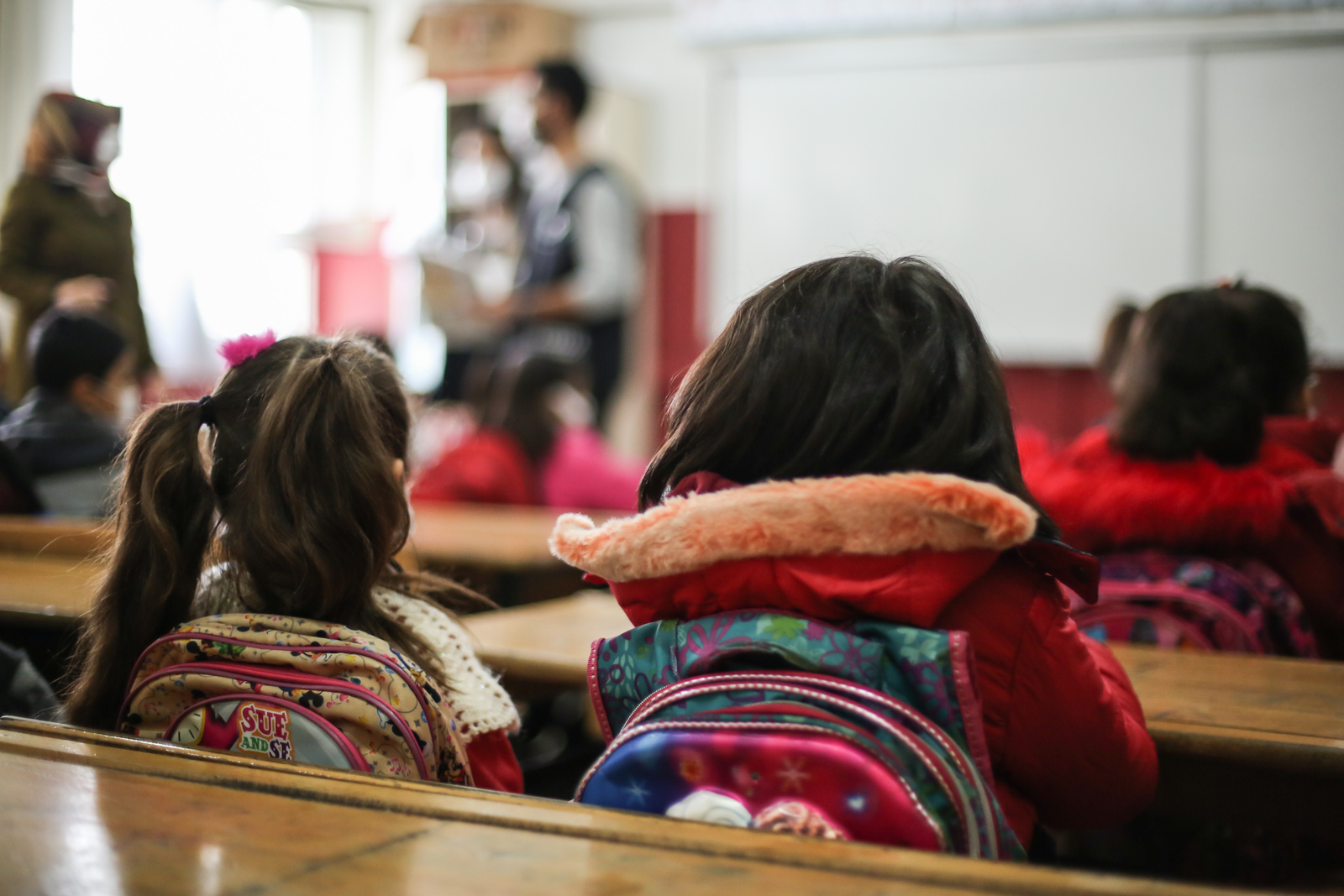

In many countries and communities, girls are often discriminated against and the most vulnerable face multiple barriers to education, ranging from child marriage and child labour to sexual exploitation and trafficking. Yet creative solutions to gender equality and girls’ education have demonstrated the impact that educating a girl can have on her community and country.
Millions of girls are out of school. It is estimated that 122 million girls and young women are not in primary or secondary school. (UNESCO, 2023)
Failure to educate girls is costly. Ongoing barriers to girls’ education are costing countries between US$15 trillion to US$30 trillion in lost lifetime productivity and earnings. (World Bank, 2023)
Girls face additional burdens like childcare duties and household chores that detract from their educational opportunities and outcomes. Girls who spend one hour a day fetching water in Nepal are 17% less likely to finish primary school. (Dhital et al., 2021)
There is a long way to go to fully address the education gap between girls and boys. Just 49% of all countries have achieved gender parity in primary education. (UNICEF, 2022)
In an increasingly digitized education world, girls often have decreased access to the internet and technology platforms, and have lower ICT skills, reducing their ability to access and benefit from remote learning. (Lindsey, 2020) (Fatehkia et. al., 2018) (Amaro et. al., 2020)
Education is not a guaranteed right in many countries. 16% of countries still do not guarantee the right to education in their constitution or laws. Among the 84% of countries that legally protect the right to education, only 58% explicitly guarantee it without discrimination based on sex and/or gender. (UNESCO, 2023)
Too many girls are failing to complete their education. In low-income countries, only 38% of girls complete lower secondary school compared to 43% of boys. Similarly in these countries, upper secondary completion rates are 26% for young men and 21% for young women. (World Bank, 2023)
Education prevents child marriage. There is a higher percentage of child marriage in countries where education is not compulsory or free. The percentage of women aged 20-24 who were married or in union before they turned 18 is more than halved in countries where education is compulsory for a minimum of nine years and free for 12 years or more, in comparison to countries where it is not compulsory or free. (UNESCO, 2023)
Better educated mothers have healthier children and families. If all mothers completed secondary school, the likelihood that their children will contract malaria would be 36% lower. (Brookings, 2016)
Educating girls leads to economic growth. Even a 1% increase in the number of women completing secondary education can increase a country’s economic growth by 0.3%. Educating girls to the same level as boys could benefit developing countries by US$112 billion a year. (Brookings, 2016) (UNICEF 2021)
Educating girls raises earnings. Each additional year of schooling helps a woman increase her earnings by 20%. (UN Women, 2022)
Increasing girls’ education decreases violence. If girls and boys had equal access to education, the chance of violence and conflict would decrease by 37%. (Education Cannot Wait, 2019)
Educated mothers have healthier families. When a mother can read, her children are 50% more likely to live past the age of five, twice as likely to attend school, and 50% more likely to be immunised. (Education Cannot Wait, 2019)
Educating girls saves lives. If all women in India and Nigeria had completed secondary education, the under-five mortality rate would have been 61% lower in India and 42% lower in Nigeria, saving 1.35 million children’s lives. (EFA GMR, 2013)
Educating girls means they can earn more and have more secure working conditions. Women with good literacy skills in Pakistan earn 95% more than women with weak literacy skills. (EFA GMR, 2013)
Education increases a woman’s agency and household decision making. Achieving universal secondary education could increase a woman’s household decision making by 1/5 and the chance that children are registered at birth by over 1/4. (Wodon et al, 2024)
Education is critical in fighting climate change. For every additional year of schooling a girl has, a country’s resilience to climate disasters increases by an average of 2-3 percentage points. (The Education Commission, 2022)
Q: Does conflict and violence affect girls’ and boys’ education equally?
A: While conflict and violence is disruptive to any child’s education regardless of their gender, girls are 2.5 times more likely to be out of school than boys, and at the secondary level are 90% more likely to be out of secondary school than those in conflict-free zones. (World Bank, 2023)

Teaching Resources
"The emancipation of girls and the evolution of our societies are through education. Their access to quality education is not only an individual right and the key to unlocking potential, it also has the power to make our world more equitable, more inclusive and more prosperous. Because an educated girl is a force for change, empowering girls to learn and empower themselves is the promise of a better world."