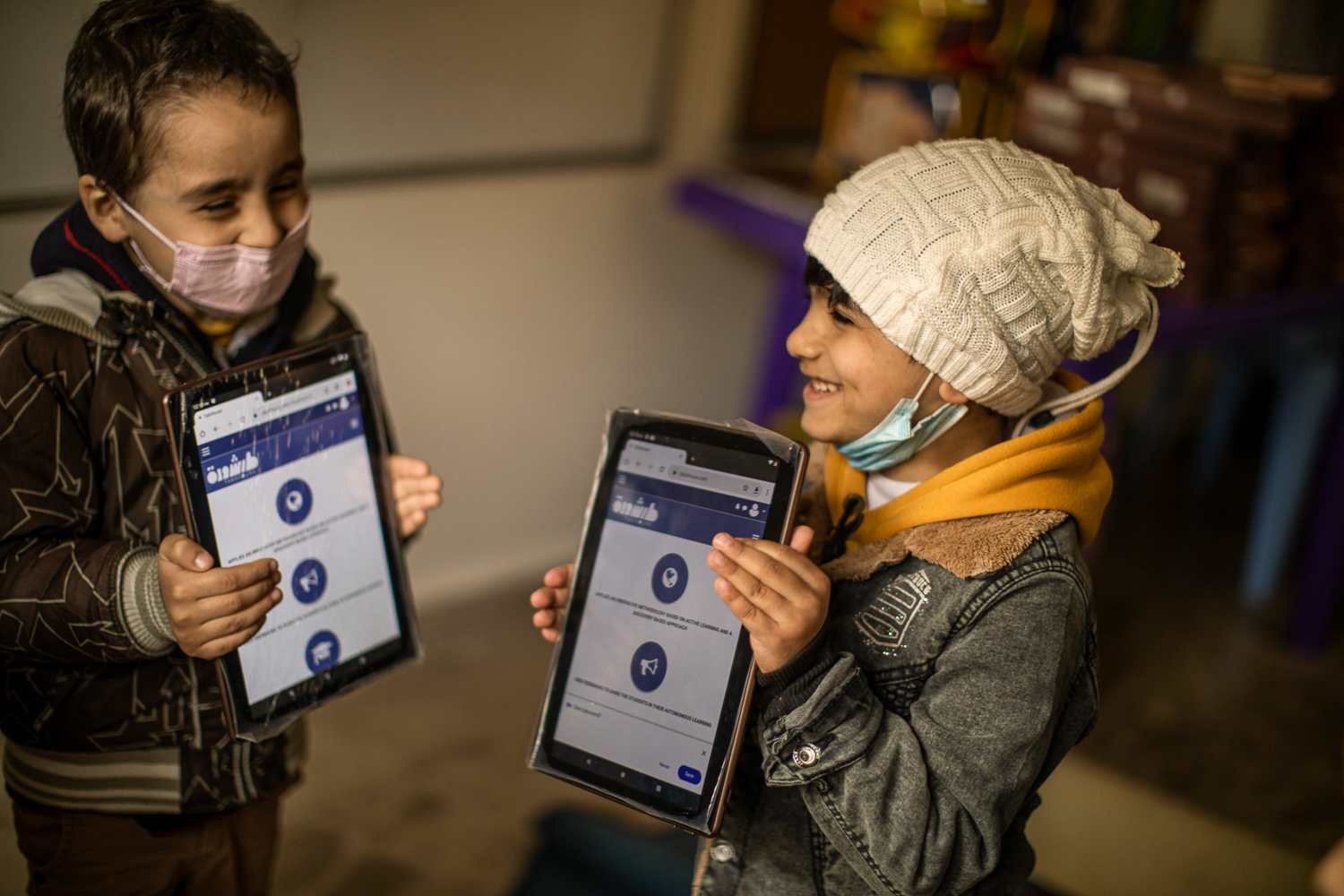

From artificial intelligence to robotics and quantum computing, the Fourth Industrial Revolution (4IR) is likely to alter society as we know it. Quality, inclusive education is needed to ensure the next generation will thrive. As a result, it is more vital now than ever that children have universal digital access to education to combat the digital divide and existing educational inequalities. Investing in getting every school and student equipped to be online will dramatically expand educational and working opportunities while creating more resilient education systems capable of hybrid learning during crises.
It is estimated that by 2030 more than half of young people worldwide will not have the basic skills or qualifications necessary for the workforce. (Education Commission, 2016)
Access to devices and connectivity at home impacts educational outcomes. Even before Covid-19, one in five teenagers aged 13 to 17 in the US said they are often or sometimes unable to complete homework assignments because they do not have reliable access to a computer or an internet connection. (Pew Research Centre, 2018)
Digital literacy is vital to the future of employment. 84% of multinational and large national companies surveyed reported being ready to digitise work. Yet the percentage of adults with basic spreadsheet skills is 7% in lower-middle-income countries, 20% in upper-middle-income countries, and 40% in high-income countries. (GEM, 2020) (World Economic Forum, 2020)
In the poorest countries, household access to the internet is extremely limited. Globally 2.2 billion children and young people aged 25 or less do not have internet connection at home. Only 6% of children and young people in low-income countries have internet access at home, compared to 87% in high-income countries. (UNICEF, 2020)
The Fourth Industrial Revolution requires reshaping the future of education and work. 65% of students in school today will work in jobs that do not currently exist. 47% of today’s jobs will be automated in the next decade. Most jobs will likely require a higher level of digital and social-emotional literacy.
(Elayyan, 2021) (World Economic Forum, 2020)
There are large gaps in access to the internet for girls and those living in rural areas. Women are 17% less likely than men to use the internet in the Arab States and Asia and 25% less likely in Africa. Globally 25% of rural children and young people aged 25 or less have internet access compared to 41% of their urban peers. (GEM, 2020) (UNICEF, 2020)
Without education, internet coverage does not translate to internet usage. In 2018, approximately 70% of the people in sub-Saharan Africa and South Asia indicated that they did not understand what the internet was or how to use it. (UNICEF, 2024)
Countries with experience using information communication technology (ICT) to deliver education were far less likely miss out on learning due to international crises. Having trained teachers in ICT for 20 years, China, South Korea, and Singapore reported minimal or zero learning loss during the COVID-19 crisis, and shifted easily to online learning. (UNICEF, 2021)
Digital connectivity in schools is possible and rapidly improving. Korea has rolled out fast connectivity to all schools, Uruguay is on track to connect all schools, and China is expanding full broadband coverage by 2020 with a priority to connect poor schools. (Education Commission, 2016; ITU/UNESCO Broadband Commission, 2015)
Young people are more likely to use digital tools for education and skill building. They are twice as likely as adults to self-study or seek online training for digital skills acquisition. (GEM, 2020)
Closing the skills gap unleashes economic potential. By closing the current skills gaps, the global economy would gain at least US$6.5 trillion by 2030 through increased productivity. (PWC, 2022)
Artificial intelligence has the potential to improve how students are assessed and guided while also helping to build digital literacy, critical thinking, creativity and problem-solving skills. Features that enhance personalised learning and streamlining teacher’s admin tasks can improve academic performance and student-teacher relationships. (World Economic Forum, 2024)
Q. What kind of skills will be valuable for resilience in the future world of work?
A. Since jobs are likely to become even more deeply reliant on technology, practical skills like digital literacy and systems analysis will be vital. Equally however, social-emotional skills such as curiosity, creativity, critical thinking, and problem solving will continue to play a big role in societies.
Q. How does gender link to future job opportunities and the digital divide?
A. Skills in what are sometimes viewed as traditionally ‘male’ jobs are twice as likely to be transferable to new employment opportunities than those in ‘female’ jobs. Also, women are 17% less likely than men to use the internet in the Arab States and Asia, and 25% less likely in Africa, putting them at a disadvantage in the future workforce. (Deloitte & GBCE, 2018) (GEM, 2020)
"The digital divide penalises poor students. And the education financing gap yawns wider than ever. Now is the time to transform education systems. So, world leaders, your people, the world’s young people and future generations are calling on you to act with vision and purpose. A new vision for education in the twenty-first century is taking shape."